
Central India National Park – Rules & Regulations
National Parks and Tiger Reserves are haven for the natural world. These thriving grounds are home to wildlife, jungles, and the tribal communities coexisting together for many-many years. These areas are not just destinations for tourism; they are vital ecosystems that safeguard our planet’s biodiversity and cultural heritage. Every visit to these pristine forests is a privilege, offering a glimpse to the untamed beauty of the wild. With this comes an underlying responsibility upon all of us.
Below guidelines are drawn from Wildlife (Protection) Act, 1972, Forest (Conservation) Act, 1980, and the Madhya Pradesh Wildlife (Protection) Rules, 1974. It highlights the principles of eco-tourism management and sustainable wildlife conservation, ensuring direct benefits to the local communities preserving the integrity of forests and minimal disturbance to its inhabitants.
TIGER SAFARIS – MADHYA PRADESH
Park/Safari Entry Regulations
- Entry in MP national parks is with a valid permit – a govt-issued ID (Like Aadhaar, Passport, Driving license, Voter ID, PAN). Ensure you carry the same for all your safaris as it will be checked at the park gate
- Entry without an authorised guide, driver and authorised safari vehicle is strictly prohibited
- You have to arrive at the entry gate at least 30 minutes prior to the safari opening time to complete formalities of ID and permit check by forest dept officials.
- Late entry to the park opening time especially after an hour may cause permit cancellation.
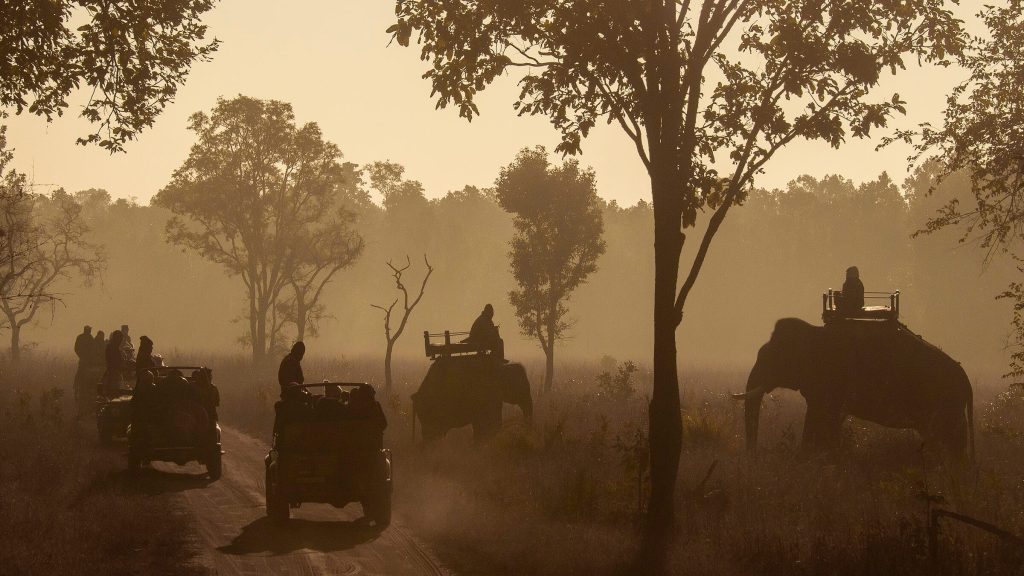
Safari Vehicle Guidelines
- Off-road or deviating from the prescribed tourism route is strictly prohibited and can cause ban of your vehicle, guide and driver
- A speed limit of 20-30 km/hr (varies from park to park) is allowed at all times, maintaining a safe distance from wild animals to cross by.
Visitor Conduct & Behaviour during Safari
- Listen to your guide and driver. Maintain silence, patience, avoiding loud conversations, mocking animals or playing music. No feeding is allowed towards wild animals
- Do not get down from the vehicle, unless instructed by the park guide. You are only allowed to get down on designated points for loo, and breakfast.
- Do not request your drivers and guides to get closer to animals while on safari.
- Avoid strong perfumes or deodorants, as strong scents can attract insects. Use organic mosquito repellents if required.
- Environmental Responsibility
- Smoking, lighting fire, or using inflammable materials is banned to prevent forest fires.
- Always carry reusable water bottles and dispose waste responsibly outside the park or at designated dust bins at Breakfast point.
- Avoid littering the park and use of plastic, aluminium foil or polythene
Safari Do’s & Don’ts – Restricted Activities
- Alcohol consumption or intoxicated entry into the park is strictly forbidden.
- Use of mobile phones is restricted to photography only – no calls or loud conversations. At some national parks carrying phones is prohibited. Check with your lodge before going on safari.
- Use of drones or filming equipment requires prior permission from the Forest department. Without permit you will be charged penalty and ban
- Do not take anything from the wild during your safari
Safety Measures
- Stay inside the vehicle during wildlife sightings for your own safety. The park authorities are not responsible for any accidents or losses incurred.
- Report any suspicious or harmful activities you notice like forest fire, immediately to forest officials
- Carry adequate drinking water and essential supplies; refuelling options are limited inside the park.
Ethical Awareness
- Always dress in earth-toned, camouflaged and muted clothing that blends well with surroundings.
- Treat the forest and its inhabitants with compassion, your behaviour reflects your respect for nature and supports responsible tourism